
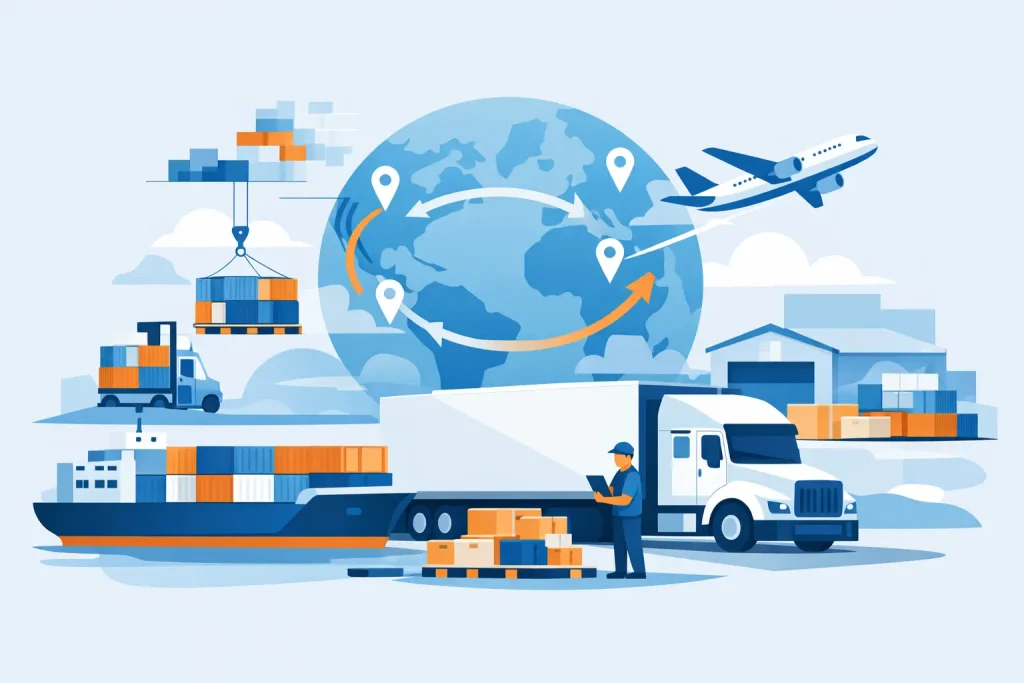
When freight bookings start multiplying, pallets stop matching order cycles, and storage space gets squeezed by inbound stock, co-loading freight solutions stop being a nice-to-have and become an operational control point. For growing brands and importers, the real issue is rarely just transport spend. It is how to move stock efficiently without compromising product care, lead times, or visibility.
Co-loading works best when it is handled with discipline. Done well, it reduces wasted space, improves shipment utilisation, and supports more flexible freight planning. Done poorly, it creates handling risk, confusion at dispatch, and avoidable delays. That difference matters when your inventory is high value, time-sensitive, or central to your brand reputation.
What co-loading freight solutions actually solve
At a practical level, co-loading means combining freight from multiple consignments so available transport capacity is used more efficiently. That may sound straightforward, but the value is not simply in sharing trailer or container space. The real benefit comes from tighter freight matching, better consolidation planning, and more controlled movement through the warehouse and distribution process.
For businesses with fluctuating order volumes, uneven inbound schedules, or mixed pallet quantities, dedicated freight can be excessive one week and insufficient the next. Co-loading freight solutions offer a middle ground. They help businesses move stock in line with actual demand rather than paying a premium for underutilised transport or waiting too long to build a full load.
This is particularly useful for importers, wholesale brands, and fast-growing product businesses that need flexibility without losing control. If you are managing seasonal peaks, promotional campaigns, or changing retail demand, freight needs to adjust quickly. A rigid transport model often cannot keep up.
Where co-loading adds value
The strongest use case for co-loading is not simply cost reduction. It is freight efficiency with stock integrity still protected.
When consolidation is managed carefully, co-loading can improve dispatch frequency, reduce the amount of freight space left unused, and support more predictable inventory flow. That has a direct impact on warehouse pressure, replenishment timing, and customer service levels. For businesses trying to keep stock moving without overcommitting to fixed transport arrangements, this matters.
There is also a cashflow benefit. If you can dispatch partial volumes more intelligently, you are less likely to hold excess stock while waiting for a full shipment threshold. That can help reduce bottlenecks across receiving, storage, and outbound distribution.
The catch is that these gains only happen when handling standards are tight. Shared freight environments introduce more touchpoints and more coordination requirements. If the provider treats co-loading as a volume exercise rather than a precision task, the risk shifts back to you.
Why precision matters in co-loading
Not all freight can be consolidated in the same way. Fragile products, branded packaging, temperature-sensitive lines, irregular carton sizes, and retailer-specific delivery requirements all affect how freight should be grouped, staged, and loaded.
That is why co-loading should never be approached as a generic transport shortcut. It needs operational judgement. Pallet configuration, carton stability, labelling accuracy, load sequencing, and cross-dock timing all influence whether the process protects your stock or exposes it to unnecessary risk.
For premium brands, this is often the deciding factor. Saving on transport means very little if product arrives damaged, outer cartons are compromised, or dispatch errors create issues downstream. Quality-first co-loading is built around control. Stock must be received correctly, handled carefully, allocated accurately, and loaded with clear accountability at each step.
This is where a hands-on logistics partner adds value beyond a standard freight operator. The operational detail matters, especially when inventory presentation and condition are part of the customer experience.
Co-loading freight solutions and warehouse integration
Co-loading is most effective when it is not treated as a stand-alone freight task. It performs better when connected to warehousing, inventory management, cross-docking, and distribution planning.
If your provider can see inbound schedules, current stock levels, order profiles, and dispatch priorities, consolidation decisions become sharper. Freight can be matched around actual inventory flow rather than estimated requirements. That reduces handling duplication and improves timing.
For example, imported stock may be devanned, checked, sorted, and moved into a co-loading stream without sitting unnecessarily in storage. Or outbound orders from multiple clients or channels may be staged through a controlled cross-dock process to maximise freight utilisation while keeping service windows intact.
This integrated approach is especially useful for businesses that do not have internal warehouse infrastructure or transport teams large enough to coordinate every movement closely. When your logistics partner operates as an extension of your business, co-loading becomes part of a wider supply chain solution, not an isolated line item.
When co-loading is the right fit
It depends on the shape of your operation.
If you move consistent full truckloads on fixed lanes every week, dedicated freight may remain the better option. If your products require specialised conditions or zero handling overlap with other freight, co-loading may need tighter boundaries or may not suit at all.
But for many growing businesses, the fit is strong. Co-loading often makes sense when order volumes vary, dispatch windows are regular but not large enough for a full load, and transport efficiency needs to improve without sacrificing service quality. It can also support market expansion by making it easier to service more locations without committing to oversized freight arrangements.
The best decision usually comes down to freight profile, stock sensitivity, and service expectations. Businesses with premium inventory should ask not just whether co-loading can lower costs, but whether it can be executed with the level of precision their products require.
What to look for in a co-loading partner
The provider matters as much as the model.
A capable partner should offer visibility across inbound and outbound movement, disciplined handling processes, and clear communication around cut-off times, load planning, and exceptions. They should be able to explain how stock is staged, how consolidation decisions are made, and what safeguards are in place to protect inventory.
Responsiveness is also critical. Freight plans change. Purchase orders land late. Retail requirements shift. Promotional volumes spike. A provider that cannot adapt quickly will create friction across the rest of your operation.
Look for operational maturity rather than broad promises. Clinical warehouse standards, accurate scanning, considered pallet build, and real accountability on dispatch all matter more than generic claims about efficiency. Businesses with valuable or brand-sensitive stock need logistics support that is built around care, not volume alone.
That is where boutique logistics operators often outperform larger networks. They tend to offer tighter oversight, faster communication, and a service model shaped around the client rather than around fixed process limitations. Durazon Logistics works in that space, supporting businesses that need tailored infrastructure and careful freight execution, not a one-size-fits-all system.
The commercial case for co-loading
Transport cost is usually the first discussion point, but the stronger commercial case is broader. Better load utilisation can improve margin, yes, but co-loading can also reduce storage pressure, support faster stock movement, and create more flexible distribution options.
Those gains help businesses stay more responsive without overbuilding internal logistics capability. For founders and operations leaders, that can mean less time solving freight inefficiencies and more time focused on product, sales, and customer delivery performance.
Still, there are trade-offs. Co-loading requires coordination and planning discipline. It is not the answer for every lane, every stock type, or every fulfilment model. The right setup is usually selective. Some movements may be ideal for consolidation, while others need dedicated handling. A good logistics partner will tell you the difference.
The businesses that get the most value from co-loading are usually the ones that treat freight as part of a wider operational strategy. They are not chasing the cheapest rate. They are building a supply chain that can scale without becoming unstable.
That is the real role of co-loading freight solutions. Not just to move more freight into less space, but to create a more controlled, efficient, and adaptable logistics operation around the way your business actually runs.
If your freight profile is becoming more complex, that is usually the point to look closer – not when service levels have already slipped, but while there is still room to build a smarter operating model around your stock, your timelines, and your standards.