
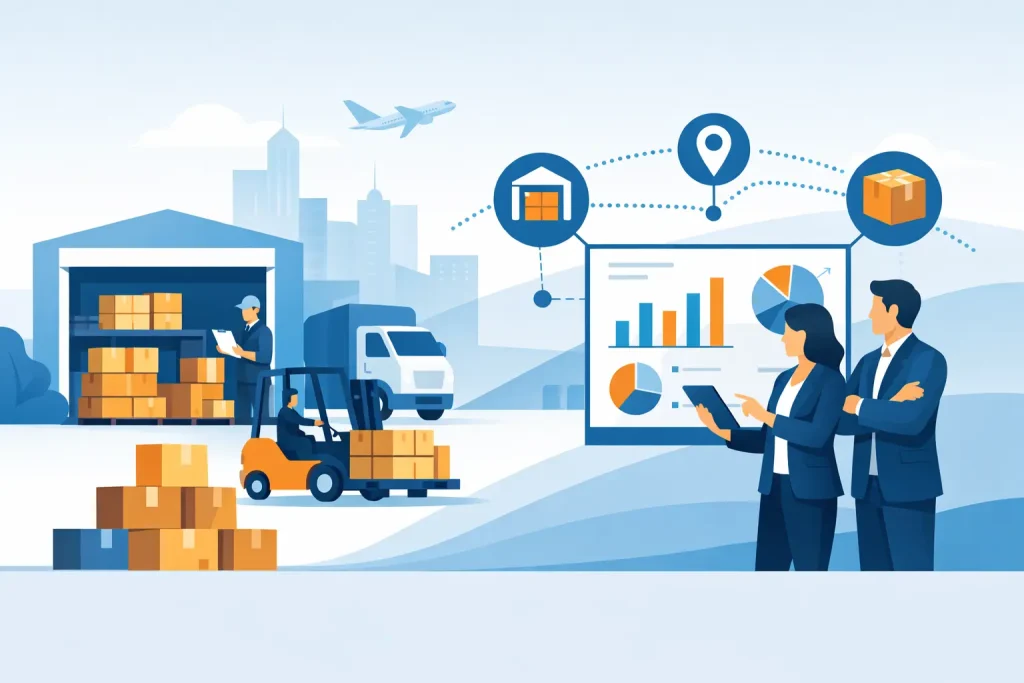
When stock starts landing faster than your team can receive it, store it, pick it and dispatch it properly, the problem is no longer space alone. It is control. That is where outsourced warehousing for brands becomes a strategic decision, not just an operational fix.
For growing product businesses, importers and premium brands, warehousing has a direct effect on margin, customer experience and reputation. A delayed receipt, a damaged carton or an inaccurate pick can flow through the whole business quickly. The right warehousing partner protects more than inventory. They protect consistency, visibility and your ability to scale without lowering standards.
What outsourced warehousing for brands actually means
Outsourced warehousing is often reduced to a simple idea: another business stores your stock. In practice, serious outsourced warehousing for brands is much broader than that. It includes inbound coordination, receipting, putaway discipline, inventory control, pick and pack execution, dispatch management, returns handling and, in many cases, value-added services such as kitting, relabelling, cross-docking or devanning.
For brands with premium products or tight delivery expectations, the warehouse is not a passive storage site. It is an operating environment where stock accuracy, handling quality and response time matter every day. If the provider treats warehousing as a commodity, brands usually feel the impact quickly through missed details, poor communication and avoidable errors.
That is why the best outsourced model is built around alignment. The warehouse team should understand how your products move, what level of care they require, how demand changes across the year and what your customers expect when an order leaves the building.
Why brands outgrow in-house warehousing
Many businesses begin with a practical in-house setup. It works for a while because the stock profile is manageable, volumes are lower and the founding team can still oversee every movement. Over time, that model tends to strain.
The first pressure point is usually labour. As order volume grows, warehouse tasks become harder to absorb internally. Picking, packing, stocktakes and receipting start competing with procurement, sales support and broader operations. Teams end up stretched across roles that require different systems, rhythms and skill sets.
The second pressure point is visibility. Once inventory starts moving across multiple channels, or containers arrive on tighter schedules, ad hoc processes stop being reliable. Spreadsheet-based control may hold for a period, but it rarely supports accurate, scalable execution. At that stage, businesses are no longer choosing between simple and complex. They are choosing between disciplined control and avoidable operational risk.
The third pressure point is space, but space on its own is often misunderstood. A larger warehouse does not solve poor flow. Brands need orderly receipting, accurate location control and a dispatch process that can keep pace without creating rework. More square metres only help if they come with better operational structure.
The real business case for outsourcing
The obvious benefit of outsourcing is reduced fixed overhead. You avoid signing a lease, fitting out a facility, buying equipment and carrying the full cost of warehouse labour year-round. That matters, especially for businesses with seasonal peaks or fluctuating inbound volume.
But the stronger business case is performance. A capable logistics partner brings established processes, trained warehouse staff, inventory systems and service discipline that would take time and capital to build internally. Instead of creating warehousing capability from scratch, you plug into infrastructure that is already designed for execution.
This is particularly valuable for brands in growth mode. Expansion tends to expose every weak point in fulfilment. More SKUs, more wholesale orders, more direct-to-consumer shipments and more supplier coordination all increase the need for precision. Outsourcing gives brands a way to scale operations without losing control of the customer outcome.
There is also a management benefit that founders and operations leaders often underestimate. When warehousing runs well under an accountable partner, internal teams can focus on planning, sales, forecasting and customer growth rather than chasing dispatch issues or resolving stock discrepancies.
Where outsourced warehousing for brands succeeds or fails
Not every outsourced setup is a good one. The gap between a premium logistics partner and a transactional warehouse operator is significant.
Success usually comes down to four areas. The first is inventory accuracy. If stock visibility is unreliable, every downstream process becomes harder. Purchasing decisions, fulfilment promises and customer communication all depend on knowing what is actually on hand.
The second is handling quality. Some brands carry stock that is fragile, regulated, high-value or presentation-sensitive. In those cases, warehousing cannot be treated as a volume game. It requires consistent process, careful receiving, clean storage conditions and a team that understands that damage prevention is part of service delivery.
The third is responsiveness. Warehousing is operational work, but it is also client-facing in practice. If a container arrives early, a customer order changes, or a replenishment needs to move urgently, you need fast answers and clear ownership. Delays in communication create delays in the operation.
The fourth is flexibility. Businesses rarely move stock in one neat, repetitive pattern. There may be promotional packs, short-run assembly, mixed-channel dispatch or urgent transfers between sites. A rigid provider may store your stock adequately, yet still slow the business down. A better partner adapts without losing control.
What to look for in an outsourced warehousing partner
The right provider should feel like an extension of your business, not a detached service layer. That starts with process discipline. Ask how goods are received, checked, quarantined if needed, and entered into inventory. Ask how pick accuracy is measured. Ask what happens when a discrepancy appears. Strong providers can answer these questions clearly because their operating model is deliberate.
Visibility is equally important. Brands need timely, reliable access to stock information, order status and movement history. You should not have to chase basic inventory data or wait days for updates that affect purchasing and customer commitments.
It also pays to assess service fit, not just capability on paper. A large provider may have scale, but if your account is too small to receive attention when something goes wrong, scale becomes less valuable. Boutique and premium brands often need a partner that can combine structure with genuine responsiveness.
This is where a quality-first logistics model stands apart. Careful handling, disciplined warehousing and tailored support may not be the cheapest option on a rate card, but they usually reduce the hidden cost of errors, damages, delays and customer dissatisfaction.
When outsourced warehousing is not the right move
Outsourcing is not automatically the best answer for every brand. If stock volume is very low, product complexity is minimal and internal operations are stable, an in-house model may remain practical for a period. The same applies if warehousing is deeply tied to a proprietary production process that cannot easily be separated.
There are also transition costs to consider. Moving warehousing to a partner requires onboarding, system alignment, stock transfer planning and clear operating rules. If a business enters that process without enough preparation, the change can create short-term friction.
That said, the risk usually sits less in the decision to outsource and more in choosing the wrong provider or setting vague expectations. Good warehousing partnerships are built with defined service levels, clear communication paths and shared accountability from day one.
A better standard for brands that need precision
For brands that care about inventory integrity, fulfilment accuracy and operational reliability, warehousing should never be an afterthought. It sits too close to the customer experience and too close to working capital.
The strongest outsourced warehousing arrangements are built around precision, not promises. They create cleaner stock control, steadier dispatch performance and more confidence across the business. That matters whether you are managing imported inventory, supporting wholesale distribution or fulfilling daily orders with strict presentation standards.
At Durazon Logistics, this is the standard businesses should expect from outsourced support: disciplined processes, real-time visibility and handling that reflects the value of the stock being entrusted to the warehouse.
If your current setup is creating friction, the right next step is not simply finding more room. It is finding an operating partner that can hold the line on quality while giving your business space to grow.