
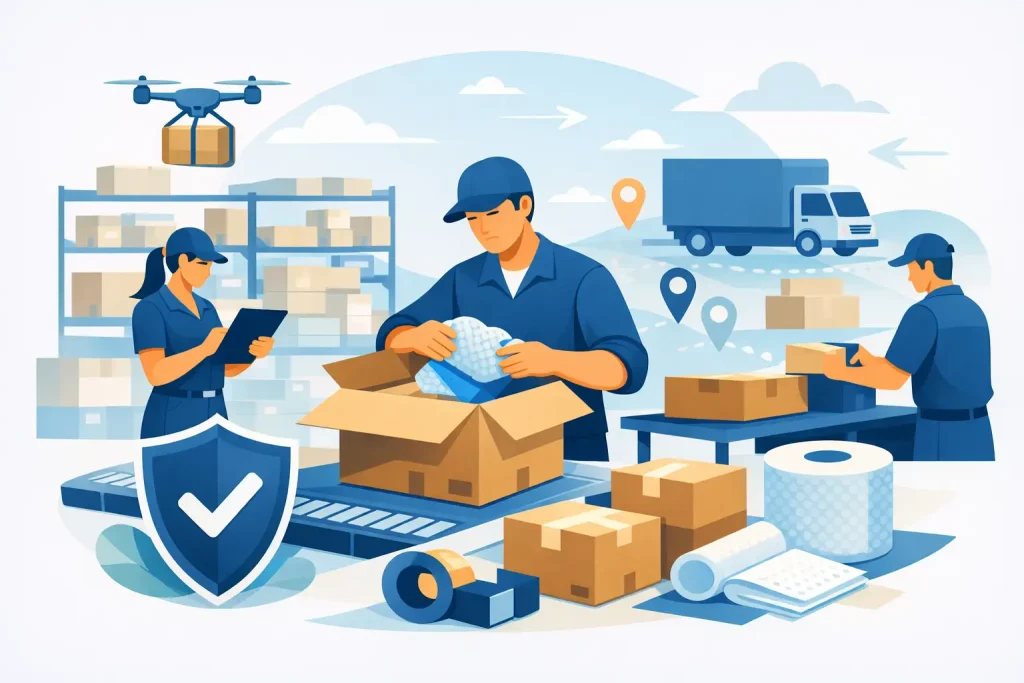
A late shipment is frustrating. A wrongly packed order is worse. When the wrong item turns up, fragile stock arrives damaged, or presentation falls short of what your customer expects, the issue is not just fulfilment. It is brand erosion. That is why pick and pack services matter far beyond the warehouse floor.
For growing brands, importers and product-based businesses, fulfilment is one of the first operational functions that starts to strain under growth. Order volumes lift, SKUs multiply, customer expectations tighten, and internal teams end up spending too much time managing stock movement instead of running the business. At that point, outsourced pick and pack becomes less about convenience and more about control.
What pick and pack services actually cover
At a basic level, pick and pack services involve receiving an order, selecting the correct items from inventory, checking quantities and specifications, packing the goods appropriately, and preparing them for dispatch. In practice, quality pick and pack is much more disciplined than that.
The process sits at the point where inventory accuracy, handling standards, packaging presentation and dispatch timing all meet. A provider is not only moving products from shelf to carton. They are making daily decisions that affect stock integrity, delivery performance and customer experience.
For some businesses, the requirement is straightforward high-accuracy order fulfilment. For others, it includes batch control, lot traceability, promotional inserts, branded packaging, multi-line orders, retailer compliance, or careful handling for premium and fragile goods. The service only works well when the warehouse process is built around those realities.
Why businesses outgrow in-house fulfilment
Most businesses do not abandon internal fulfilment because picking and packing is impossible. They outgrow it because it becomes inconsistent, labour-heavy and distracting.
A founder packing orders after hours may work for a while. So can a small team using spare warehouse space and spreadsheets. But once order frequency increases, that model starts creating risk. Mis-picks rise. Packing quality varies between staff. Inventory visibility becomes less reliable. Storage areas get cluttered. Dispatch cut-offs are missed because the operation depends on whoever is available that day.
That is usually the point where businesses realise fulfilment needs process discipline, not just effort. Good outsourced pick and pack introduces structure, scanning, location control, defined handling standards and a team that is accountable for execution every day.
The real value of precision in pick and pack services
Accuracy is the obvious benchmark, but precision in pick and pack services runs deeper than picking the right SKU.
A precise operation protects inventory from avoidable damage. It reduces returns caused by preventable handling errors. It supports clean stock rotation. It helps maintain a consistent presentation standard across every order leaving the warehouse. For brands with premium products, that matters. A carton that is poorly packed, overfilled or underprotected tells the customer something about the business, whether you intended it to or not.
Precision also affects internal decision-making. When inventory records are reliable, purchasing becomes sharper, stock transfers are easier to manage and customer service teams can respond with confidence. When they are not, small fulfilment mistakes spread into wider supply chain problems.
This is where a quality-first logistics partner brings value. The right provider treats pick and pack as an operational control point, not a simple labour task.
How to assess pick and pack services properly
Price always enters the conversation, but low-cost fulfilment can become expensive very quickly if it creates errors, damages stock or weakens customer trust. A better question is whether the service model fits your business.
Start with handling standards. If your products are fragile, premium, regulated or presentation-sensitive, you need a provider with disciplined warehouse processes and clear packing protocols. Generic fulfilment setups often struggle when product care matters.
Then look at inventory visibility. You should know what stock is on hand, what has moved, what has been allocated and where exceptions sit. If reporting is delayed or unclear, you are operating with blind spots.
Responsiveness matters as well. Warehousing and fulfilment are not static functions. Orders change, shipments arrive unexpectedly, promotions create spikes, and customers request special handling. A provider that communicates slowly or hides behind ticket systems can create operational drag when fast decisions are needed.
Scalability is another test. Some businesses need stable daily order fulfilment. Others need support through seasonal surges, new product launches or retail replenishment peaks. The right partner can flex with that demand without sacrificing accuracy.
Pick and pack services and brand consistency
Businesses often treat warehousing as a back-end function, but customers experience it as part of the brand. The product they receive, the condition it arrives in, the packaging, the order accuracy and the timing all shape perception.
That is especially relevant for boutique and premium brands. If you have invested in product quality, packaging design and customer retention, your fulfilment operation has to carry the same standard. Fast dispatch alone is not enough.
This is why customised pick and pack arrangements are often more effective than one-size-fits-all models. A business shipping skincare, electronics accessories, subscription boxes and wholesale cartons does not need the same handling method across every line. Different SKUs require different storage logic, packing materials and quality checks.
When fulfilment is built around your products rather than forced into a generic system, the result is usually fewer exceptions and a stronger customer experience.
Where pick and pack fits in the wider supply chain
Pick and pack should not be viewed in isolation. It works best when it sits inside a connected warehousing and distribution model.
Inbound receipting affects stock accuracy before any order is picked. Putaway logic influences how quickly and correctly products can be selected. Kitting requirements may need to happen before saleable stock is ready. Cross-docking may reduce unnecessary storage in some situations. Distribution planning affects cut-off times and delivery performance.
If those functions are fragmented across multiple providers or managed with limited visibility, fulfilment issues tend to increase. A more integrated setup gives businesses clearer control over stock, movement and service standards from inbound through to final dispatch.
That does not mean every business needs a complex 4PL structure. It means the provider handling pick and pack should understand the wider operational picture and be capable of aligning warehouse execution with your broader supply chain requirements.
When outsourced fulfilment is the right move
Not every business needs outsourced pick and pack immediately. If order volumes are low, SKU ranges are simple and internal accuracy is strong, in-house fulfilment may still be efficient.
The case for outsourcing becomes stronger when stockholding is consuming valuable space, dispatch reliability is starting to slip, order complexity is increasing, or internal staff are spending too much time on warehouse tasks that sit outside their core role. It also makes sense when service expectations rise and the cost of a fulfilment error becomes more significant.
For importers and scaling brands, outsourcing often brings another advantage: operational resilience. Instead of relying on a small internal team, the business gains a dedicated warehouse function with established processes, trained staff and infrastructure built for day-to-day execution.
That shift is not just about taking work off your plate. It is about creating a fulfilment model that can support growth without compromising stock accuracy or customer experience.
What good pick and pack looks like in practice
A strong operation is usually recognisable quickly. Orders are processed with consistency. Inventory locations are controlled. Exceptions are identified early rather than after dispatch. Packing methods reflect the product being shipped. Communication is direct. Reporting is current. The provider understands your requirements and acts like an extension of your business, not a detached contractor.
That level of service does not happen by accident. It comes from process discipline, trained teams, clear accountability and a warehouse culture that values care as much as speed.
At Durazon Logistics, that is the standard businesses are looking for when they move away from commodity fulfilment. They want pick and pack support built around precision, visibility and reliable execution, especially when their products and customers demand more than a basic warehouse solution.
The right fulfilment partner should make your operation feel tighter, calmer and more dependable. If your current setup is doing the opposite, it may be time to expect more from the people handling your stock.