
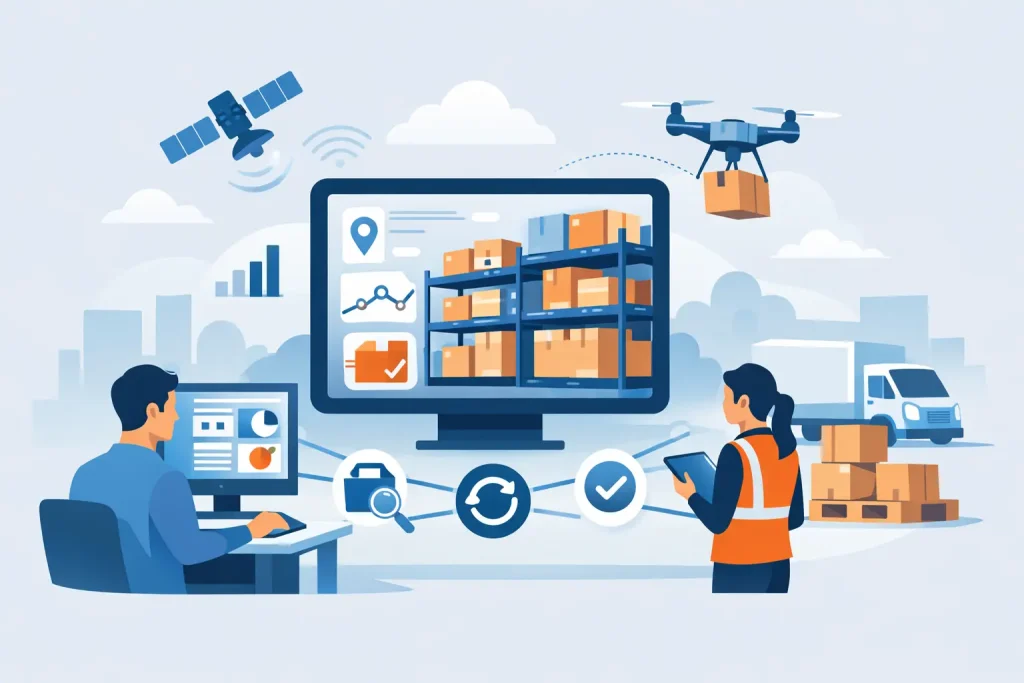
A sales order lands at 4:12 pm. Customer service says the item is available, the warehouse team sees a different number, and purchasing is already chasing replenishment for stock that may still be sitting in a receiving lane. That gap is where margin gets lost. Real time inventory visibility closes it by giving every decision-maker access to the same current stock picture, not a delayed version of it.
For growing brands, importers and operations teams, this is not just a reporting feature. It is an operational control point. When inventory data lags behind physical movement, small errors multiply quickly – across fulfilment, forecasting, customer communication and cash flow. When visibility is live and accurate, the business runs with more confidence because stock decisions are based on what is actually happening on the floor.
What real time inventory visibility actually means
Real time inventory visibility means stock information updates as inventory moves through your operation. That includes inbound receipts, putaway, picking, packing, transfers, cycle counts, returns and dispatch. The goal is not simply to know how much stock you own. It is to know where it is, what condition it is in, whether it is available to sell, and what has changed in the last few minutes.
That distinction matters. Many businesses believe they have visibility because they receive a stock report at the end of the day or can export data from an ERP. In practice, delayed reporting creates blind spots. If a pallet has been received but not allocated correctly, if a batch is on hold, or if an urgent order has just consumed the last sellable units, yesterday’s figures do not help much.
True visibility depends on disciplined warehouse execution as much as technology. A dashboard is only as useful as the scan compliance, location control and process accuracy behind it. If physical handling is inconsistent, the system will simply display inaccurate information faster.
Why real time inventory visibility matters in outsourced logistics
When warehousing and fulfilment sit outside your own four walls, confidence in stock control becomes even more important. You need more than assurance that inventory is being managed well. You need direct, timely access to what is happening, without chasing updates through email chains or waiting for a spreadsheet.
For outsourced logistics clients, real time inventory visibility supports three things at once. It protects service levels, reduces operational friction and strengthens planning. Your sales team can commit stock with more certainty. Your operations team can plan inbound and outbound flow without second-guessing inventory status. Your leadership team can make purchasing and distribution decisions on cleaner data.
This is especially important for businesses with premium products, promotional cycles, seasonal demand or complex handling requirements. If your stock carries a high unit value or your customer promise depends on precise fulfilment, poor visibility is not a minor inconvenience. It is a direct threat to customer experience and brand credibility.
The operational benefits are broader than stock accuracy
Most conversations start with inventory accuracy, and rightly so. If the system says 200 units are available when only 160 can actually be picked, the downstream damage is immediate. Orders get short shipped, customer service absorbs the fallout, and replenishment decisions become reactive.
But the value of real time inventory visibility goes further. It improves receiving control because inbound stock can be checked, located and made visible quickly. It supports cleaner order allocation because available inventory reflects live movement. It helps identify slow-moving or stranded stock before it becomes a write-down. It also creates a stronger base for cycle counting, exception management and audit readiness.
There is also a commercial upside. Better visibility reduces over-ordering and emergency freight. It can lower the amount of safety stock a business feels forced to carry just to compensate for uncertainty. For growing brands, that often means less capital tied up in inventory that is sitting still.
Where businesses usually lose visibility
The weak points are rarely dramatic. More often, they build from everyday process gaps. Goods are received in bulk but not fully reconciled at line level. Stock is moved between locations without a scan. Returns are set aside pending review and remain invisible to the system. Pick exceptions are fixed manually and never recorded properly. At first, these seem manageable. Over time, they create a stock file that cannot be trusted.
Multi-channel selling adds another layer of pressure. If inventory is feeding wholesale orders, retail replenishment, e-commerce and marketplace demand at the same time, latency becomes expensive. A stock number that is even a few hours behind can lead to overselling or poor allocation.
Complex product profiles also create challenges. Kitting, bundled SKUs, serial tracking, batch control and expiry-sensitive inventory all require tighter process discipline. In these environments, visibility is not just about quantity on hand. It is about status, traceability and availability by rule.
Real time inventory visibility depends on process discipline
Technology matters, but process integrity matters first. Reliable visibility comes from a warehouse operation that treats every stock movement as a controlled event. Receiving must be accurate. Putaway must be location-led. Picks, transfers and adjustments must be recorded at the point of action, not later when someone has time.
This is where many providers fall short. They promise visibility, but what they really offer is system access layered over inconsistent handling. That creates a false sense of control. A quality-first logistics partner builds visibility into the operating model itself, with scanning, location accuracy, exception escalation and disciplined reconciliation all working together.
For clients, the practical question is simple: can you trust the stock number when the pressure is on? During peak trading, urgent replenishment, a customer complaint or a time-sensitive dispatch, the answer needs to be yes.
What to look for in a logistics partner
If real time inventory visibility is a priority, ask how inventory is captured, validated and maintained – not just what software is used. A capable partner should be able to explain how stock is received, how discrepancies are handled, how locations are controlled and how exceptions are reported back to your team.
You should also expect clarity around what is visible to you and when. That includes stock on hand, stock available, inbound status, order status, holds, returns and adjustments. Visibility should be practical, not cosmetic. If your team still needs to request updates manually to understand critical stock movements, the model is not delivering enough control.
Responsiveness matters too. Even with strong systems, inventory exceptions happen. A short receipt, damaged pallet or mislabelled carton can affect downstream decisions quickly. The difference is how fast the issue is identified, isolated and communicated. Real visibility supports faster action, but only when the provider operates with ownership.
Why this matters for growth
As businesses scale, inventory complexity rises faster than many expect. SKU counts expand. Channels multiply. Customer expectations sharpen. Promotion planning gets tighter. At that point, spreadsheets and delayed reports stop being workable. Leaders need clean, current stock data to make decisions without slowing the operation down.
Real time inventory visibility gives growing businesses room to scale with control. It supports better forecasting, stronger replenishment timing and more accurate customer commitments. It also reduces the internal noise that comes from uncertainty. Teams spend less time checking numbers, reconciling conflicting reports and managing avoidable service issues.
That has a cultural benefit as well as an operational one. When inventory information is dependable, teams can move faster because they are not working around doubt. Sales, customer service, warehouse operations and procurement stay aligned around the same version of the truth.
For businesses that treat logistics as a brand-critical function, that alignment matters. Stock is not just stock. It is customer promise, working capital and service reputation sitting on a shelf. Managing it with clinical precision is not excessive. It is good operating discipline.
A logistics partner should make your inventory easier to trust, not harder to interpret. If your current setup leaves you chasing updates, questioning stock figures or padding inventory decisions with guesswork, the issue is not just visibility. It is control. And control is what allows a business to grow without compromising service.