
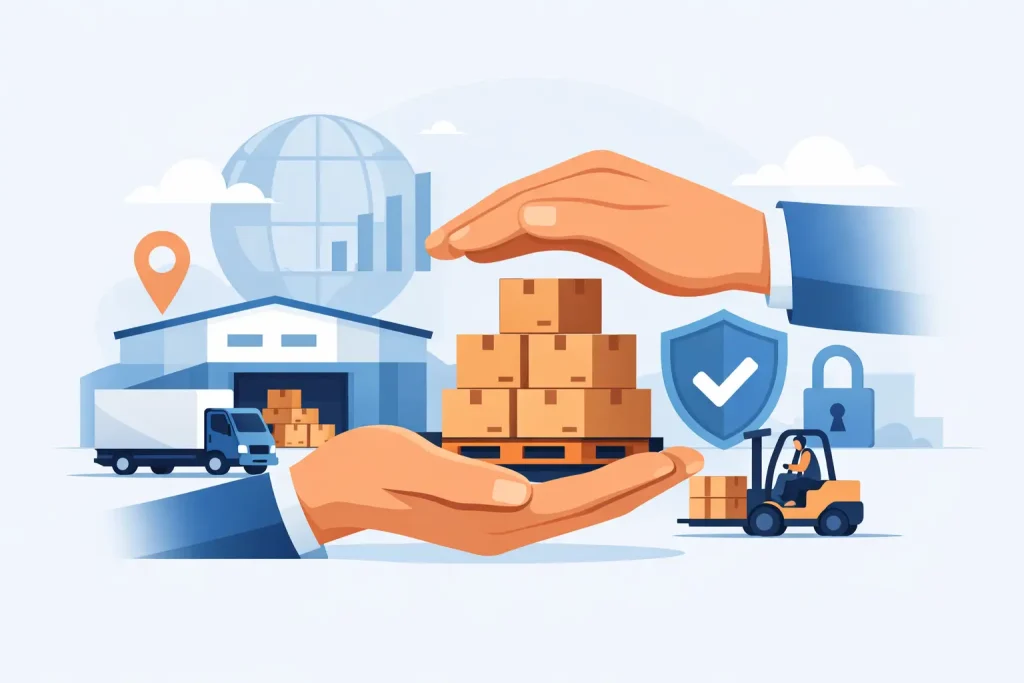
A missed scan, a crushed carton or stock placed in the wrong zone can cost far more than storage fees. For brands carrying high-value, fragile or reputation-sensitive inventory, warehousing is not a back-of-house function. It is a direct extension of customer experience, margin protection and operational control. That is where premium warehousing services earn their place.
The difference is not just a cleaner facility or a sharper SLA. It is the way inventory is received, checked, stored, handled, picked and moved with clinical precision at every touchpoint. For growing brands, importers and operations teams under pressure, that level of care changes what warehousing actually delivers.
What premium warehousing services really mean
Premium warehousing services are built around accuracy, responsiveness and stock integrity. The service model is designed for businesses that cannot afford generic handling, slow communication or broad-brush processes. In practical terms, that means tighter receipting controls, better inventory visibility, more disciplined storage logic and a team that treats every movement as commercially significant.
This matters most when your stock carries a higher consequence if something goes wrong. That could be due to product value, batch control, presentation standards, fulfilment complexity or retailer expectations. A warehouse that works for bulk commodity goods may be completely wrong for premium retail products, sensitive imports or multi-channel inventory with strict handling requirements.
The premium layer also shows up in responsiveness. When inbound containers are delayed, demand spikes unexpectedly or a customer order needs special handling, you need a warehouse partner that can act quickly without losing control. That balance between agility and discipline is where many standard providers fall short.
Why some businesses need a higher standard of warehousing
Not every business needs the same warehouse model. If your operation is high-volume and low-touch, a commoditised setup may be sufficient. But if your stock requires presentation care, traceability, fast-turn fulfilment or tailored distribution support, a lower-cost model can become expensive very quickly.
Brands with premium positioning often feel this first. Packaging damage, inaccurate picks and delayed dispatch do not stay inside the warehouse. They show up in customer complaints, returns, retailer friction and internal rework. The warehousing provider may still hit a basic service target on paper while your brand absorbs the real cost.
Growing businesses also face a different kind of pressure. They are scaling order volume, adding SKUs and testing new channels, but they do not yet have the internal logistics infrastructure to manage that complexity in-house. They need a partner that can provide control without forcing them into rigid systems or excessive overhead.
For importers, the warehousing requirement can be even more specific. Container devanning, pallet configuration, overflow management and staged distribution all need to align. If the warehouse cannot coordinate those moving parts cleanly, stock ends up sitting, labour gets duplicated and delivery commitments drift.
The operational traits that define premium warehousing services
A premium warehouse operation is usually recognisable before you ever review pricing. The receiving process is methodical. Exceptions are identified early. Storage locations are intentional, not improvised. Inventory data is current enough to support decisions, not just monthly reporting. The floor team understands that handling quality is part of service quality.
That operational discipline should carry through every stage. Goods-in should include verification against purchase orders or manifest data, visible reporting on discrepancies and careful putaway based on product type and movement profile. Storage should account for weight, fragility, batch requirements and pick frequency, rather than simply filling available space.
Order fulfilment is another point of separation. In a premium environment, pick and pack is not treated as a repetitive labour function alone. It is a controlled process with attention to order accuracy, packaging standards and dispatch timing. That is especially important when orders carry retailer compliance requirements, gift presentation standards or mixed-SKU complexity.
Communication matters just as much as process. A business using premium warehousing services should not have to chase updates or interpret vague answers. Clear reporting, fast issue escalation and direct contact with people who understand the account are part of the service. When a warehouse acts like an extension of your business, information flows properly and decisions get made faster.
Where premium service pays off
The strongest return from premium warehousing is often risk reduction. Fewer stock discrepancies mean less time spent investigating variances and less cash tied up in uncertainty. Better handling lowers damage rates, which protects both product margin and brand perception. More accurate fulfilment reduces returns and customer service load.
There is also a planning advantage. With reliable inventory visibility and a warehouse team that can execute consistently, operations managers can forecast, allocate and replenish with more confidence. That confidence matters during seasonal peaks, product launches and channel expansion.
The benefit becomes even clearer when additional services sit under the same operational umbrella. Kitting, relabelling, cross-docking, co-loading and distribution coordination all work better when handled within a disciplined warehouse environment. Instead of passing stock between disconnected providers, the business gets one controlled workflow with fewer failure points.
That said, premium does not mean every business should pay for the highest-touch model across all SKUs. Sometimes a blended approach is more sensible. Your fast-moving standard lines may only need efficient storage and dispatch, while your premium ranges, promotional kits or fragile products need tighter controls. The right provider should be able to shape the service around that reality rather than forcing one operating model across the board.
Choosing premium warehousing services without overbuying
The phrase sounds attractive, but not every premium offer is genuinely operational. Some providers use the language to justify pricing without showing how their process protects your stock or improves performance. The better test is to look past marketing claims and examine how the warehouse actually runs.
Ask how inbound discrepancies are managed, how stock accuracy is maintained and how exceptions are escalated. Review how inventory is segmented, what visibility you will receive and how flexible the team is when requirements shift. If your business has specific handling rules, check whether they are documented and consistently followed, not just verbally agreed.
It is also worth looking at team structure. Large providers can offer scale, but account attention sometimes becomes diluted. Boutique operators often bring stronger accountability and faster communication, though capacity and network fit still need to be assessed properly. There is no universal answer here. It depends on your product profile, growth stage and the level of operational complexity you need the warehouse to absorb.
A good partner should also be candid about trade-offs. More checks can improve accuracy, but they can also add time if the process is not well designed. Highly customised workflows can support brand standards, but they need clear governance to stay efficient as volumes grow. Premium service works best when precision is built into the operating model, not layered on as manual effort.
Premium warehousing services as a growth decision
At a certain point, warehousing stops being a storage conversation and becomes a business model decision. If your team is spending too much time chasing inventory answers, fixing fulfilment issues or managing provider gaps, the warehouse is affecting far more than logistics. It is shaping cash flow, customer experience and your ability to scale with control.
That is why many quality-conscious brands move towards a more tailored logistics setup earlier than expected. They are not paying for polish. They are paying for fewer errors, better visibility, faster response and a warehouse team that understands the commercial impact of every carton handled.
For businesses that need that level of care, premium warehousing services are not an upgrade for appearance. They are infrastructure built around precision, accountability and stock protection. And when your inventory carries both value and expectation, that standard is not excessive. It is simply the level the operation requires.
The right warehouse should make your business feel more controlled, not more complicated. If your current setup creates uncertainty, friction or avoidable loss, that is usually the clearest signal that a higher standard of warehousing is worth serious attention.