
A missed inbound slot, stock booked in late, and a high-value order sitting unpicked can turn a normal trading day into a service failure. For brands carrying margin-sensitive, time-sensitive or premium inventory, supply chain support services are not a back-office extra. They are the operating layer that protects product integrity, order accuracy and customer trust.
For growing brands, importers and product businesses, the pressure rarely sits in one place. It shows up across warehousing capacity, inbound coordination, pick accuracy, distribution timing and inventory visibility. That is why the best support model is not built around isolated tasks. It is built around control, responsiveness and logistics infrastructure that works as an extension of your business.
What supply chain support services actually cover
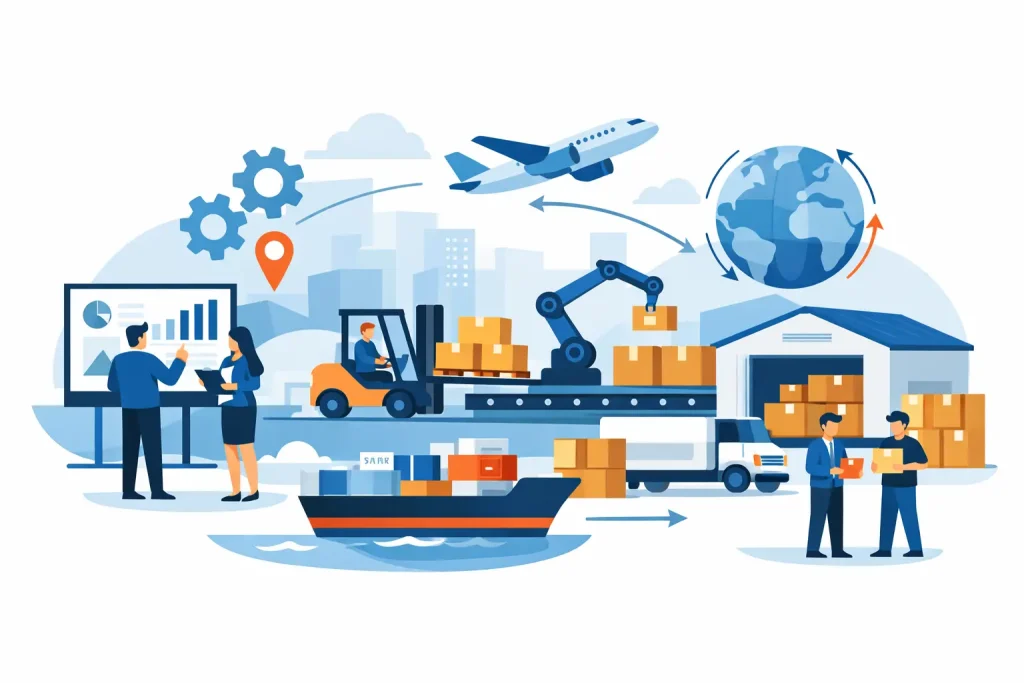
The phrase can sound broad because it is. In practice, supply chain support services refer to the operational functions that keep goods moving accurately from arrival through to final dispatch. That usually includes warehousing, inventory management, pick and pack, kitting, cross-docking, devanning, co-loading, distribution coordination and the systems that hold the whole process together.
What matters is not how many services sit on a provider’s capability list. What matters is whether those services connect cleanly. A warehouse team that receives stock quickly but cannot maintain live inventory accuracy creates risk downstream. A provider that can pick orders fast but struggles with inbound planning will still cost you time, sales and confidence.
Support services work best when they are designed as one controlled environment. That means clear booking procedures, disciplined handling, accurate data capture, responsive communication and process ownership at every handover point.
Why supply chain support services matter more as you grow
Early growth often hides logistics weaknesses. A founder can still keep tabs on orders, stock can be stored across a few locations, and workarounds feel manageable. Then order volume lifts, SKU counts expand, retailer expectations tighten and inbound freight becomes less predictable. What once felt flexible starts creating friction.
At that point, supply chain support services become a growth decision as much as an operational one. The right setup gives your business room to scale without losing control. The wrong setup creates stock discrepancies, delayed dispatch, preventable claims and constant internal firefighting.
This is especially true for businesses with premium handling requirements. If your products are fragile, presentation-sensitive, batch-sensitive or packed to strict retail standards, basic warehousing is not enough. You need a quality-first environment where handling standards are applied consistently, not only when issues arise.
The difference between basic logistics and quality-first support
Many providers can store pallets and send cartons out the door. That is not the same as delivering dependable support. The difference usually comes down to precision, visibility and accountability.
Precision means stock is received, checked, stored, picked and dispatched under controlled processes. It means location accuracy matters. Labelling matters. Damage prevention matters. It also means the team notices exceptions early, rather than passing problems further down the chain.
Visibility means you are not waiting for partial answers when stock levels, inbound timing or order status matter. You should be able to make decisions based on reliable information, not warehouse guesswork. For operations managers and founders, this is often the dividing line between feeling in control and constantly chasing updates.
Accountability is where many large, volume-driven models fall short. When your provider treats your freight as just another movement in the system, nuance gets lost. A support partner should understand what your stock means to your business, where the risk sits and what standard the work must meet every time.
Core services that strengthen supply chain performance
Warehousing is the base, but not the whole story. The way inventory is stored, handled and monitored affects every downstream outcome. A clean warehousing operation supports faster pick cycles, fewer losses and better stock confidence.
Pick and pack sits closer to the customer experience. Accuracy here protects both revenue and brand perception. If an order reaches a customer incomplete, damaged or incorrectly packed, the cost is more than a replacement. It is trust, internal time and often future sales.
Kitting becomes important when products need bundling, promotional assembly, labelling changes or channel-specific presentation. Done well, it creates flexibility without creating internal labour pressure. Done poorly, it creates delays and inconsistency.
Cross-docking and devanning are often overlooked until inbound flow becomes a problem. These functions help businesses manage container arrivals, reduce unnecessary storage dwell time and move stock through the network with more control. For importers, especially, this can make a material difference to speed and handling quality.
Co-loading and distribution coordination matter when freight efficiency and delivery timing need to be balanced. There is always a trade-off between cost, urgency and service level. A capable logistics partner helps manage that trade-off with clear operational judgement, rather than forcing your business into a fixed model that does not suit the job.
Choosing supply chain support services that fit your business
Not every business needs the same level of support, and that is exactly the point. The strongest model is one built around your actual trading patterns, service expectations and stock profile.
If you have seasonal peaks, flexibility matters more than a generic rate card. If you handle premium goods, care standards matter more than sheer throughput. If your team needs rapid answers to stock and order questions, communication discipline matters as much as physical infrastructure.
It also depends on how complex your channels are. A business shipping bulk wholesale orders has different operational needs from a brand fulfilling direct-to-consumer orders, retail replenishment and promotional kits at the same time. The wider the channel mix, the more important integration becomes.
A good provider will not oversimplify this. They should be able to map your inbound profile, storage needs, order patterns and exception risks, then shape a service model around them. That is where boutique support has a real advantage. It tends to allow more operational alignment, tighter communication and faster adjustment when conditions change.
What to ask before appointing a provider
The right questions usually reveal more than the sales pitch. Ask how inventory accuracy is maintained and how exceptions are escalated. Ask what happens when inbound freight arrives outside plan. Ask how pick quality is checked, how urgent orders are handled and how visibility is shared with your team.
You should also ask who owns the relationship operationally. A polished proposal means little if day-to-day service gets lost between teams. Businesses with high standards need direct accountability, not layered handovers and slow replies.
There is also a practical question around fit. A very large provider may suit businesses that prioritise volume rates and standardised flows. A more tailored operator may be the better fit if your products need careful handling, your requirements shift frequently or your brand cannot afford operational slippage.
The value of an integrated 3PL and 4PL approach
As supply chains become more complex, support services need to do more than execute warehouse tasks. They need to connect warehousing, fulfilment, freight coordination and operational oversight in a way that reduces friction.
That is where a combined 3PL and 4PL mindset can add real value. The 3PL layer handles physical execution. The 4PL layer adds broader coordination, visibility and process control across the network. Not every business needs a fully developed 4PL model, but many growing brands benefit from a partner that can think beyond storage and dispatch.
This broader view helps when the challenge is not one isolated activity, but the interaction between inbound delays, stock availability, order prioritisation and delivery planning. A partner with that operational perspective is better placed to solve root issues, not just react to symptoms.
For businesses that want precision without building a large internal logistics function, that support model can be a practical advantage. It creates structure, improves responsiveness and gives leadership teams better visibility over what is happening on the floor and across the wider chain.
When support becomes a competitive advantage
The strongest logistics setups are rarely the loudest. They are the ones that keep promises, protect stock and absorb complexity without lowering service standards. That consistency gives brands room to sell, launch, scale and plan with more confidence.
Well-run supply chain support services do more than move cartons. They reduce avoidable cost, protect customer experience and create operational headroom. For a business with growth plans, that is not just support. It is part of the commercial engine.
At Durazon Logistics, this is where the standard should sit – built around your business, managed with clinical precision, and delivered with the kind of care that makes your operation stronger every day.
If your logistics partner cannot match the standard your brand expects, the gap will show up sooner or later. Better support does not just fix pressure points. It gives your business a steadier platform to grow from.